De-Risking the Board Meeting Before It Starts
A four-week prep cadence for de-risking the board meeting before it starts, so tough numbers get socialized one-on-one and no director sees a red metric for the first time in the room.

The best board meetings are anticlimactic. Every hard number has already been discussed, every uncomfortable metric has a plan attached, and the two hours in the room are spent on decisions rather than reactions. That outcome is not a function of charisma or luck. De-risking the board meeting is a process problem, and the process runs for four weeks before anyone opens a deck.
A surprise in the boardroom is a failure of that process. The most common version is a red metric appearing live — a director seeing churn tick past 3% or a burn multiple crossing 2.0x for the first time on a slide, in front of peers. The reaction is rarely about the number. It is about the fact that they are learning it now.
Four weeks out: align with the CEO on the narrative
The board deck is not a finance artifact. It is the CEO's argument, and the CFO builds the evidence. Before any slide gets drafted, the two of you need to agree on the single story the quarter tells: we are ahead on efficiency but behind on pipeline, or growth held but retention is the emerging risk.
This is the same discipline covered in architecting the board deck narrative, not the slides — the sequencing decision comes first. Four weeks out, you are not writing anything. You are deciding what the meeting is about.
Get the framing wrong here and every later step compounds the error. Aileen Lee's original Cowboy Ventures work on unicorns and the broader post-2022 correction have trained directors to read efficiency metrics closely. If the CEO thinks the story is growth and the board is reading for capital efficiency, the room will drift regardless of your slides.
Two weeks out: socialize the hard ideas one-on-one
This is the load-bearing week. Every difficult idea in the deck — a downward revision, a hiring freeze, a decision to extend runway by cutting a product line — gets pre-briefed one-on-one with the directors who will care most.
The mechanics are unglamorous: a 30-minute call with your lead investor, a separate one with the independent director who chairs the audit committee, a note to the operator on the board who will have the sharpest questions about the number. You are not seeking approval. You are removing the shock, and often collecting the objection early enough to answer it in the deck rather than live.
Here is the failure mode nobody names. You pre-brief a director on Wednesday that net revenue retention is 104%. Sunday's data refresh — a late invoice, a corrected usage feed, a reclassified contract — drops it to 99%. You have now created the exact surprise you spent two weeks trying to prevent, and it is worse because you personally vouched for the stale figure.
Pre-briefing is only as safe as the data underneath it. If your NRR number is assembled from a spreadsheet that pulls from the billing export on the first of the month, you are pre-briefing off a snapshot that will move. The Financial Executives Research Foundation has documented for years how much close-cycle latency distorts what management reports upward; the board version of that problem is that the latency lands squarely in your credibility. This is why the pillar on turning the board deck from a data dump into a decision document treats live data as a precondition, not a nice-to-have — and why it belongs alongside the rest of the visibility discipline.
One week out: ship the package early, then freeze it
The deck goes out at least five days before the meeting. This is not a courtesy; it is a governance expectation. Governance guidance from bodies like the National Association of Corporate Directors and the classic Harvard Business Review work on what makes great boards great both point the same direction: directors who read cold in the room cannot govern, and directors who receive materials the night before will resent it.
Once it ships, freeze it. Late changes are where errors enter — a version-control mistake, a chart that no longer ties to the appendix, a number the CEO quotes from the draft that never made the final. If Sunday's refresh moves a figure after the deck is out, you send a one-line correction, not a new deck. The freeze is only tolerable if you trust the numbers were right when you sent them, which loops back to the same dependency: reconciled, current data at ship time.
The three-day counter-view
Not everyone runs four weeks. Some CFOs, particularly at earlier stages with tighter boards, run a compressed three-day rhythm: narrative and pre-briefs on day one, deck assembly on day two, final review and distribution on day three. It works when the board is small, aligned, and reads live dashboards between meetings so the deck confirms rather than reveals.
The three-day version is not lazier — it is a bet that visibility has already been socialized continuously, so the meeting prep is confirmation rather than discovery. It fails badly the moment a metric turns and no one saw it coming. Which is, again, a data-freshness problem before it is a calendar problem.
The 48 hours after
De-risking does not end when the meeting does. Within two business days, minutes go out with every action item assigned to a named owner and a date. This is where the next quarter's narrative starts, and where you close the loop on any question you had to defer — the discipline of answering board questions live without "I'll get back to you" depends on that follow-through being visible.
The through-line across all four weeks is that surprise is optional. It happens when management reports off numbers it cannot watch move. When you can see the figure changing in real time — when it is the same live number you pre-briefed on, not a snapshot that drifts by Sunday — the boardroom stops being a place where anyone learns anything for the first time. That is the whole point. The rest is calendar management. For the tooling angle, the tools and operations coverage goes deeper on the close-cycle mechanics.
More in this series
The Briefing
One email a week. No filler. No fluff.
Read by CFOs, founders, and finance operators at high-growth companies.
Continue reading

REVENUE
Why ARR and recognized revenue never tie out.
The board deck says one number, the income statement says a lower one, and the CEO wants to know who is wrong. Neither is: here is why ARR and recognized revenue never tie out, and the bridge that explains the gap instead of chasing it.

EFFICIENCY
Reading the Rule of 40 and CAC payback together.
Growth and burn are a single trade-off, not two metrics. Reading the Rule of 40 and CAC payback together shows whether the efficiency your board demands is real or borrowed from next quarter.
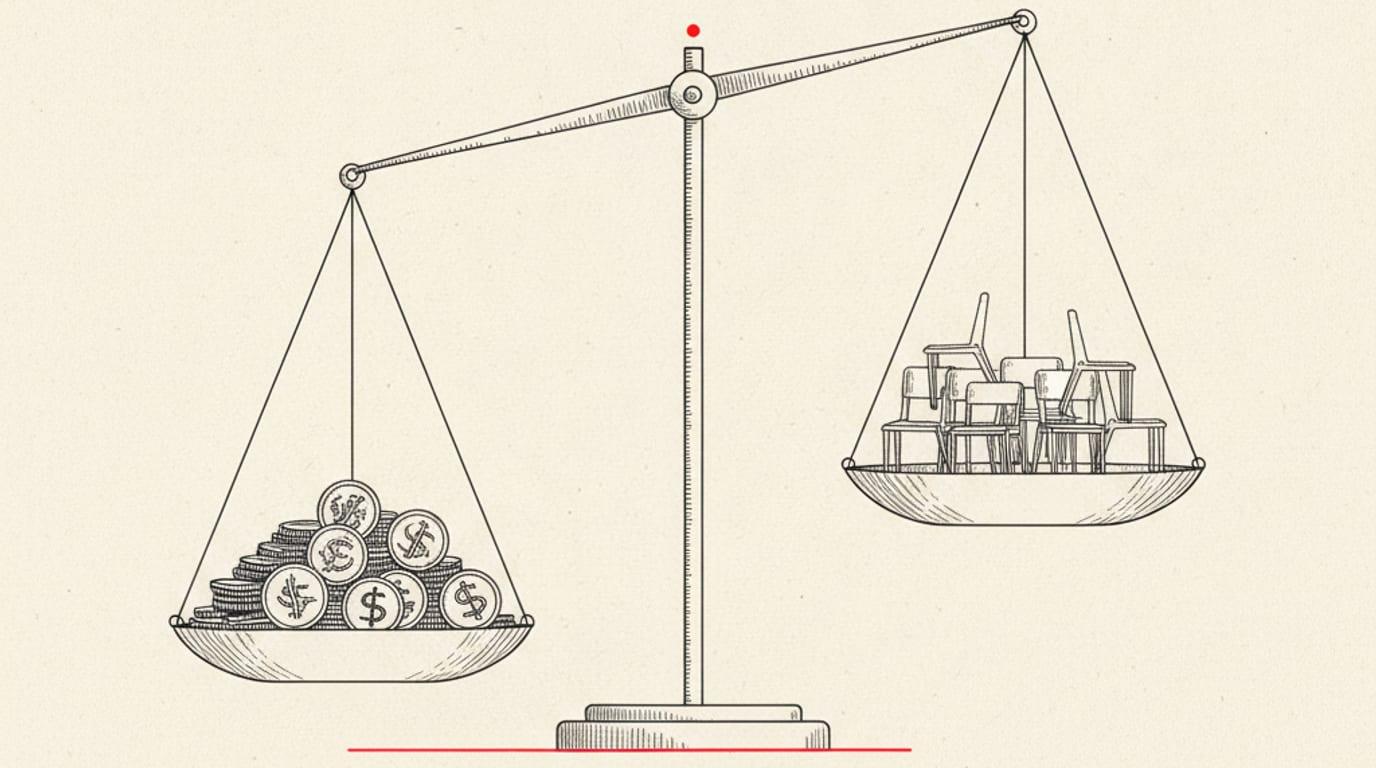
The Hiring Ledger
Headcount Planning That Protects Runway, Not Just Records Hires
A CFO-level framework for headcount planning that protects runway by tying every approved role to fully-burdened cost, ramp, and a specific revenue driver before the offer goes out.