Transaction Cutoff Discipline Is Where the Fast Close Is Won
Why transaction cutoff discipline — not the final reporting step — decides whether your books close on day five or day twelve.
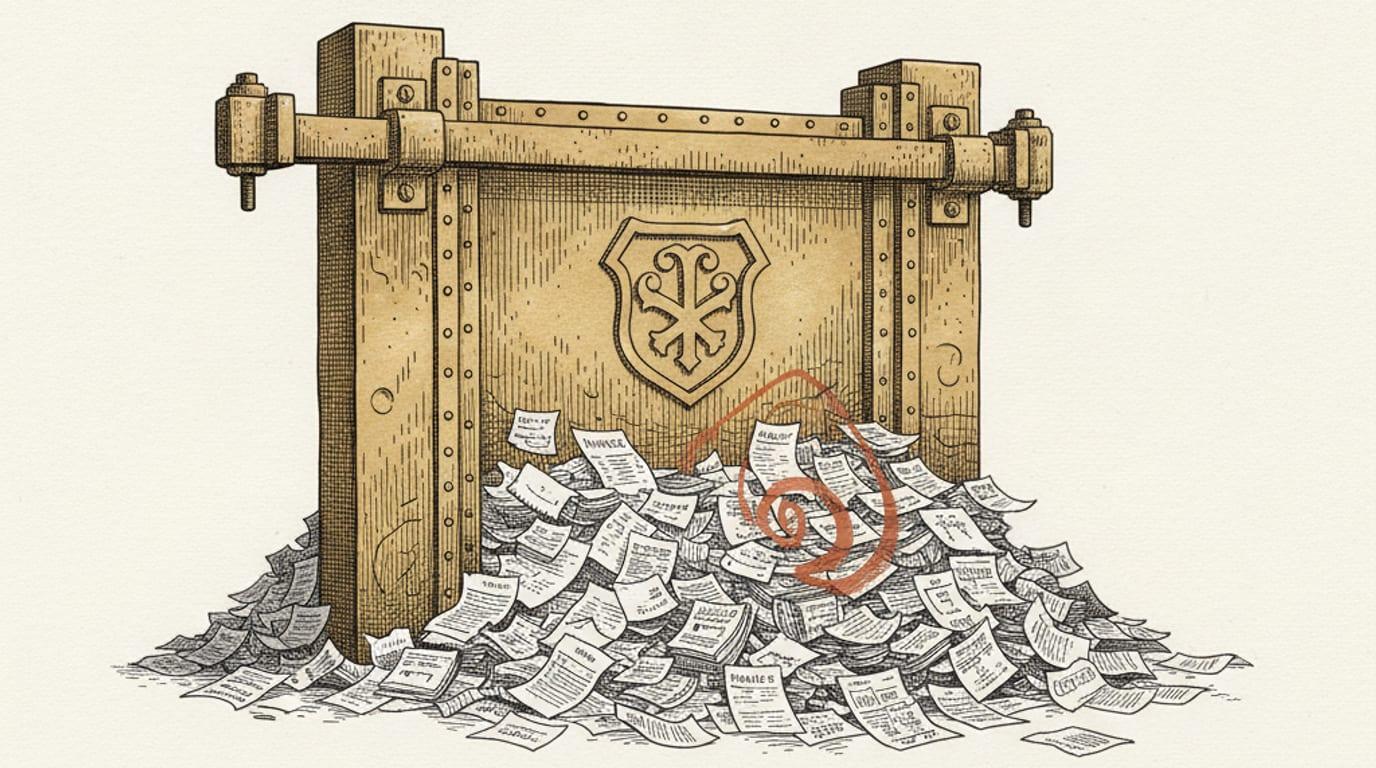
The teams that close on day five and the teams that close on day twelve often run the same software, staff the same number of accountants, and follow the same reporting checklist. The difference is upstream. By the time the trial balance is ready to review, the close has already been decided — and the deciding factor is transaction cutoff discipline, the boring set of rules governing when an entry is allowed to hit the books and when it is not.
The final reporting step is where most finance teams look for speed. It is the wrong place to look. The reporting step is fast or slow depending on how clean the inputs were when they arrived.
The close starts before day one
The mistake is treating the close as a sprint that begins on the first business day of the new month. The fast-close teams treat the days before period-end — call it U-5 through U-1, the unwind window — as the real work.
Four things belong in that window.
Intercompany reconciliations. If you have more than one legal entity, intercompany mismatches are the single most reliable source of a stuck close. Reconcile them before period-end, not after, so a $40,000 transfer that one side booked and the other didn't gets caught while there's still time to fix it cleanly. This is the same logic behind continuous balance sheet reconciliation: pull the work forward so day three isn't an archaeology dig.
Prepaid roll-offs and recurring accruals. Most of your accruals are knowable in advance. Rent, software subscriptions, insurance amortization, the predictable slice of your AICPA-defined period expenses — these are templated entries that don't need to wait for the period to end. Stage them on U-3. Booking known items early is free time you're choosing not to take.
Hard cutoffs, communicated early. AP, payroll, and expense submissions are the three input streams that arrive late and break everything downstream. The cutoff isn't a suggestion you email on day two. It's a date the whole company knows by the 20th: vendor invoices in by this date, expense reports submitted by this date, payroll finalized by this date. The GAAP matching principle only works if the inputs show up on time.
The soft cutoff is the enemy
A soft cutoff is one that bends. Someone asks nicely, and an entry that should have landed last period lands this one. The journal gets reopened. The trial balance you reviewed on day four is no longer the trial balance you're reporting on day six.
The failure mode is specific and it compounds. One late expense report means one more reconciliation to redo. A reopened journal means the SOX-style controls you signed off on no longer match the final numbers. Each exception looks small. In aggregate they are the difference between a five-day close and a twelve-day one.
The rule that fixes this is blunt: no journal entries after a stated cutoff without controller sign-off. Not "we prefer you don't." A documented gate, with a named person who has to approve the exception and a reason that gets logged. The point of the sign-off isn't bureaucracy — it's friction. If reopening the books requires a conversation, people stop doing it casually.
The political problem is the real problem
Here is the part nobody writes about. The cutoff doesn't break because accounting is sloppy. It breaks because Sales rebooks a contract on D+9 because a customer asked nicely, and the VP of Sales outranks whoever is running the close.
This is a power problem dressed as a process problem. The controller says the books are closed; the revenue leader says this one deal needs to land in the prior period; and unless there's an agreement that predates the disagreement, the books reopen.
The fix is to make the cutoff a company policy, not a finance preference. That means the CFO ratifies it, it's written down, and the exceptions are visible. When a contract gets rebooked across a period boundary, that decision should be logged with who approved it and why — the same discipline the SEC expects of public filers, applied internally well before you're public. A logged exception is a deterrent. A quiet one is an invitation.
It helps to reframe the ask. Sales isn't wrong to want the deal counted. The question is whether counting it on D+9 is worth reopening a closed period and re-running every reconciliation downstream. Usually, once the cost is made explicit, the answer is to count it next period. The cutoff holds because the trade-off is visible, not because finance won an argument.
Cutoff discipline is a visibility problem
The deeper reason cutoff discipline matters is that a late input isn't only a late entry. It's a delayed decision. Every day the books stay open is a day leadership is making calls off last month's numbers — or off a draft that's still moving.
This is the throughline of the day-by-day close calendar: the calendar only works if the inputs respect it, and the inputs only respect it if the cutoffs are hard. When entries can land whenever, the close has no spine, and the reporting bottleneck you keep trying to fix is downstream of a discipline problem you never named.
The teams that have moved past month-end batch processing entirely tend to run on systems that surface transactions as they post, so the question of "is this in the right period" gets answered continuously rather than litigated at cutoff. Tooling here ranges from the reconciliation-first approach of BlackLine to lighter real-time platforms.
See how live transaction visibility changes where cutoff sits in the close.None of this requires new headcount. As the pillar on shortening the close argues, speed comes from moving work earlier and refusing to let it slide later — not from staffing the day-five scramble. Cutoff discipline is where that refusal lives. Win it before day one, and the rest of the close gets a lot quieter.
More in this series
- How to Shorten the Month-End Close Process Without Adding Headcount
- Transaction Cutoff Discipline Is Where the Fast Close Is Won
- Continuous Balance Sheet Reconciliation, Not the Month-End Excavation
- The Day-by-Day Close Calendar That Breaks the Reviewer Bottleneck
The Briefing
One email a week. No filler. No fluff.
Read by CFOs, founders, and finance operators at high-growth companies.
Continue reading

REVENUE
Why ARR and recognized revenue never tie out.
The board deck says one number, the income statement says a lower one, and the CEO wants to know who is wrong. Neither is: here is why ARR and recognized revenue never tie out, and the bridge that explains the gap instead of chasing it.

EFFICIENCY
Reading the Rule of 40 and CAC payback together.
Growth and burn are a single trade-off, not two metrics. Reading the Rule of 40 and CAC payback together shows whether the efficiency your board demands is real or borrowed from next quarter.

The Hiring Ledger
Headcount Planning That Protects Runway, Not Just Records Hires
A CFO-level framework for headcount planning that protects runway by tying every approved role to fully-burdened cost, ramp, and a specific revenue driver before the offer goes out.